How Sellers Evaluate Buyer Credibility

Understanding More Than the Purchase Price

Many sellers assume the challenge is getting an offer.
Often, the harder question is understanding which offer is actually worth accepting.
Purchase price is an important part of the conversation, but it is rarely the only consideration. Financing, contingencies, timing, and a buyer’s ability to follow through can all influence how an opportunity is evaluated.
When sellers can review and compare multiple options, they often gain a clearer understanding of the tradeoffs between them before making a decision.

Buyer Credibility Is More Than Purchase Price

A common misconception is that the highest offer is automatically the strongest offer.
In reality, sellers often evaluate the complete package.
Two buyers may offer the same price, yet one may have verified funds, fewer contingencies, and a timeline that better aligns with the seller’s needs.
Experienced sellers frequently consider both the amount being offered and the likelihood that the transaction will proceed under the proposed terms.
Price matters. Confidence moving forward matters as well.

What Is Buyer Credibility?

Buyer credibility refers to the overall strength and reliability of a buyer’s position.

Rather than relying on a single document or qualification, sellers often consider several indicators together.

No factor provides certainty on its own. Buyer credibility simply helps sellers better understand the opportunity in front of them before making a commitment.

A seller may also want to understand:

Factors That Influence Offer Strength

01. Financing Strength

What it means:

How the buyer plans to fund the purchase.

What it means:

Documentation showing financial readiness can help sellers understand the buyer's position.

02. Proof of Funds

What it means:

Evidence that funds are available to complete the transaction.

What it means:

Provides greater visibility into a buyer's ability to perform.

03. Contingencies

What it means:

Conditions that must be satisfied before closing.

What it means:

Can affect transaction timing and overall certainty.

04. Timeline

What it means:

The buyer's proposed closing schedule.

What it means:

A timeline that matches the seller's goals may strengthen the offer.

05. Earnest Money

What it means:

A deposit submitted with the offer.

What it means:

May provide insight into buyer commitment.

06. Buyer Follow-Through

What it means:

The buyer's ability to meet agreed requirements.

What it means:

Preparedness and responsiveness can influence confidence throughout the transaction.

Different Buyer Types May Present Different Strengths
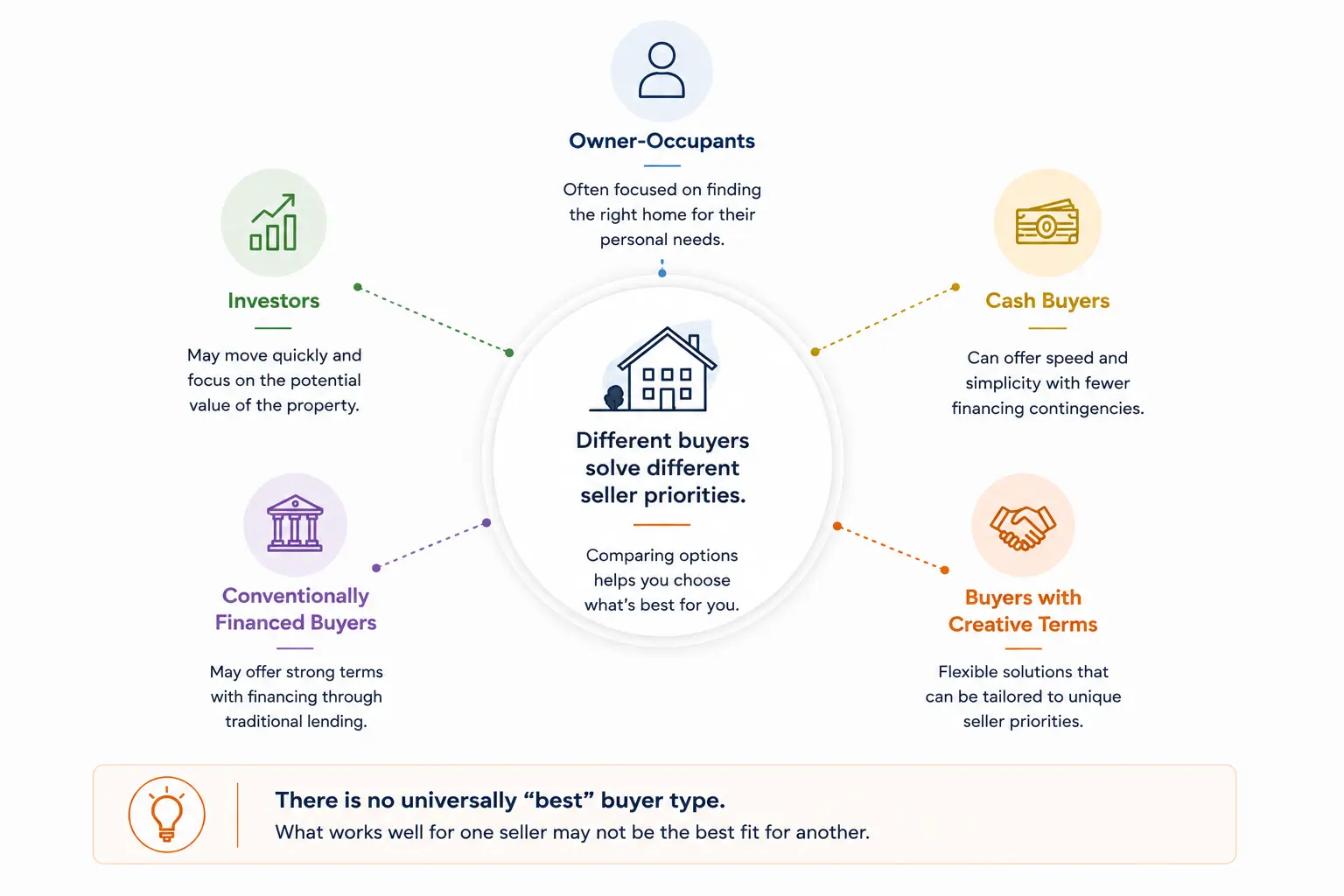
Owner-occupants, investors, cash buyers, conventionally financed buyers, and buyers proposing creative terms may each bring different advantages and tradeoffs.
What works well for one seller may not be the best fit for another.
Because different buyers can solve different seller priorities, many property owners find value in reviewing multiple offer types before making a decision. Comparing alternatives side by side often reveals distinctions that are difficult to identify when evaluating a single offer in isolation.

Why Offer Comparison Matters

Not all opportunities are structured the same way.

Two offers with similar prices

may differ significantly in financing, contingencies, timelines, deposit amounts, flexibility, and overall transaction certainty.

The difference

These differences are not always obvious at first glance.

A structured comparison helps

Reviewing multiple buyers and offer types can provide greater market visibility and a more complete understanding of available options.
This principle sits at the center of informed decision-making: understanding alternatives before choosing among them.

Compare How Different Offers Are Structured

See how price, terms, timing, and buyer qualifications can vary across different opportunities.

These questions can help sellers move beyond headline numbers and better understand the strengths and tradeoffs of each option.

Buyer Credibility Is Part of a Complete Decision

Buyer credibility is an important consideration, but it is only one part of the evaluation.
Sellers often weigh multiple factors together, including purchase price, financing, timing, flexibility, terms, and overall confidence in the transaction.
The strongest option for one seller may not be the strongest option for another.
Comparing opportunities before committing allows sellers to make decisions based on a fuller understanding of the available choices rather than any single data point.

FAQs

What is buyer credibility in real estate?
Buyer credibility refers to the overall strength and reliability of a buyer’s position, including financial readiness, financing qualifications, contingencies, timing, and the ability to complete the transaction under the proposed terms.
Not necessarily. Sellers often consider factors beyond price, including financing strength, contingencies, timing, flexibility, and the likelihood that the transaction will proceed as expected.
In a structured review process, sellers may have the ability to evaluate multiple offers and offer types side by side. This can help provide greater visibility into available options before making a decision.
Creative offers may include terms that differ from conventional purchase structures. Sellers often evaluate these opportunities by considering the complete package, including price, terms, timing, flexibility, and overall fit.
Not automatically. Cash can simplify certain aspects of a transaction, but sellers typically evaluate the complete offer, including timing, terms, documentation, and overall suitability.
Sellers may review proof of funds, financing pre-approval documentation, timelines, contingencies, and other information that helps demonstrate financial readiness and transaction preparedness.