The Number You Don't See in a Cash Offer
Don’t leave money on the table.
When a home-buying company makes you an offer, there’s a number you don’t see. It’s the margin: the room the company leaves between what it pays you and what it expects to sell your house for.
I know that number well. For 16 years, I built it into offers myself.
The short answer: a cash offer is usually built backward from the company’s resale price. The company starts with what it expects to sell your house for, then subtracts its costs and its profit. Most cash buyers build in a resale margin of 10% or more. What’s left is what that company can afford to pay, which isn’t necessarily what your house is worth to someone else.
Why is my cash offer so low?
Because the offer starts from the buyer’s numbers, not yours.
When I was buying houses, I wanted a price where I could resell the next day if I had to, and still earn a profit. That was true even on houses I planned to fix up. My target was usually around ten percent. Some companies target more; across the business, that margin is usually ten to twenty percent.
And that margin wasn’t all profit. Buying costs, selling costs, holding costs, repairs and risk all came out of it.
That isn’t wrong. It’s how buying works. One national home-buying company says it plainly in the fine print on its own website:
“Our offers are typically discounted below market value in exchange for speed and convenience.”
Less money, in exchange for speed and convenience. That’s the trade. And here’s what most sellers never stop to think about: what a company can afford to pay is a ceiling for that company. It isn’t a ceiling for your house.
Same house. Same condition. $50,000 apart.
One seller came to us with a $235,000 cash offer from a TV-advertised cash buyer. Through 14days, she sold for $285,000. Also cash.
Nothing about the house had changed. The buyer had.
And it wasn’t a one-time thing. Another seller wrote that 14days got him over sixty thousand dollars more than his highest offer from outside of 14days:
“…got us over $60,000 more than our highest offer from outside of 14 Days.”
— Mike D., Google review
Individual results vary. Every house is different.
Who buys the house the next day?
When a home-buying company buys a house, here’s a question most sellers never ask: who are they selling it to?
I know the answer, because for 16 years that was my business. Often a landlord. A contractor. A neighbor. We knew how to find them. That’s how we made our money.
Those buyers exist whether or not a company sits in the middle. When you fill out a cash-offer form online, you reach one company. The buyer who paid $285,000 wasn’t on the other end of that form.
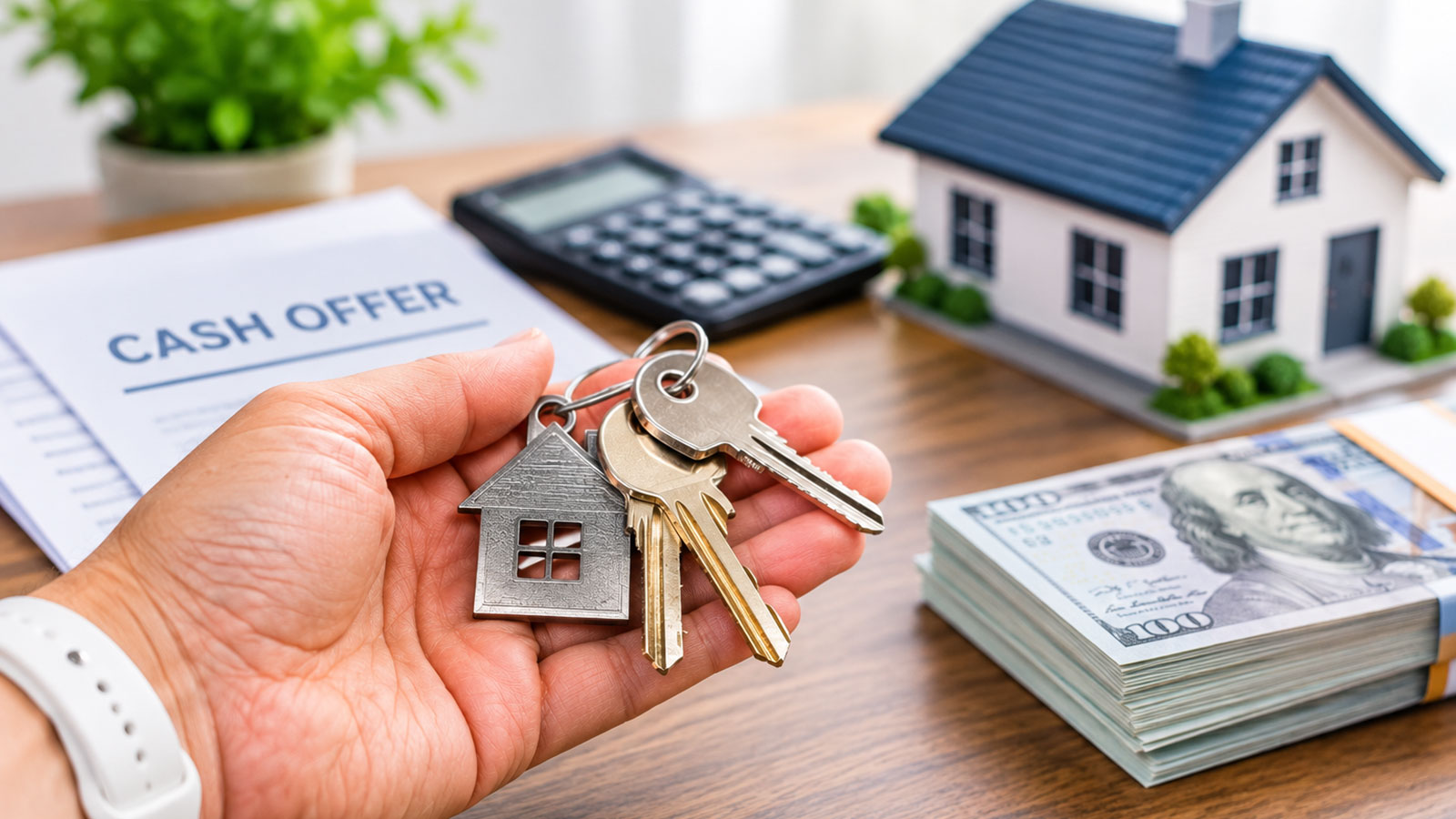
Why I stopped buying houses and started representing sellers
After 16 years of buying houses, I started asking myself a question. What if, instead of trying to buy the house for less, I could help the homeowner sell it for more?
That’s why I built 14days. I realized we could do the hardest part of the home-buying business, finding the right buyer, without buying your house first and selling it again. That changes the math. With no extra purchase and resale in the middle, the costs of that middle step disappear, so that additional value can stay with you.
It changes our math, too. Because we don’t have to buy every house ourselves, we can help a lot more sellers, and that’s how we build a bigger business. 14days is a licensed Arizona real estate brokerage. We work for you, and we bring that buyer straight to you.
Is it worth paying a fee to reach a different buyer?
Fair question. Maybe you’d rather not pay a fee at all. But if another buyer would pay ten or fifteen percent more, and your seller fee is three percent, would you take that deal?
I would.
Your seller fee is paid at closing, and only if you accept an offer we bring. Before that, we put our own time and money at risk first. We spend real money marketing every house, usually a thousand to fifteen hundred dollars.
If we can’t do better than what you could get on your own, we shouldn’t be in business — and you won’t owe us a thing.
Before you accept a cash offer, ask one more question
A cash offer can be perfectly reasonable for the way that company does business. That doesn’t make it the most your house can bring.
So before you sign, ask: what would the next buyer pay? Finding out doesn’t commit you to selling, to the MLS, or to accepting any offer.
If someone is going to make money on your house, shouldn’t more of it be yours?
Want to see more real results first? See how other sales turned out.
Frequently asked questions
Why is my cash offer so low?
A cash offer is usually built backward from the company’s resale price. The company starts with what it expects to sell your house for, then subtracts its costs and its profit. Most cash buyers build in a resale margin of 10% or more.
Who buys a house from a home-buying company?
Often a landlord, a contractor or a neighbor. Those buyers exist whether or not a company sits in the middle. When you fill out a cash-offer form online, you reach one company.
When do I pay the 14days seller fee?
Your seller fee is paid at closing, and only if you accept an offer we bring. If we can’t do better than what you could get on your own, you won’t owe us a thing.
Martin Boonzaaijer
Related Articles